Carbonic Acid vs. Sulfur Burners for Water pH Control
Organic growers accepted the sulfur burner's tradeoffs for decades: smoke at startup, on-or-off control, and a pH target that high-alkalinity water often never reaches. Not because it worked well, but because nothing better was allowed. That changed.
| Sulfur Burner | With ECO2MIX |
|---|---|
| pH 7.2 some events, 6.5 others; no feedback | Every event holds a precise setpoint |
| Sulfur dioxide smoke; workers keep clear | No smoke, no fumes. CO₂ and water only |
| Manual chamber cleaning and corrosion checks | Calibrated and serviced every 6 to 8 weeks |
| Sulfate accumulating every season | No residue. CO₂ reverts to gas |
| 15+ HP combustion system | 1 HP motor |
Why Doesn't a Burner Reach the Target?
A sulfur burner runs or it stops. Output is fixed, so when bicarbonates rise, the buffering wins: the burner runs the whole event and the water still arrives at pH 7.2. Nothing in the system tells the grower. This is common in exactly the high-alkalinity water that drives growers to treatment in the first place.
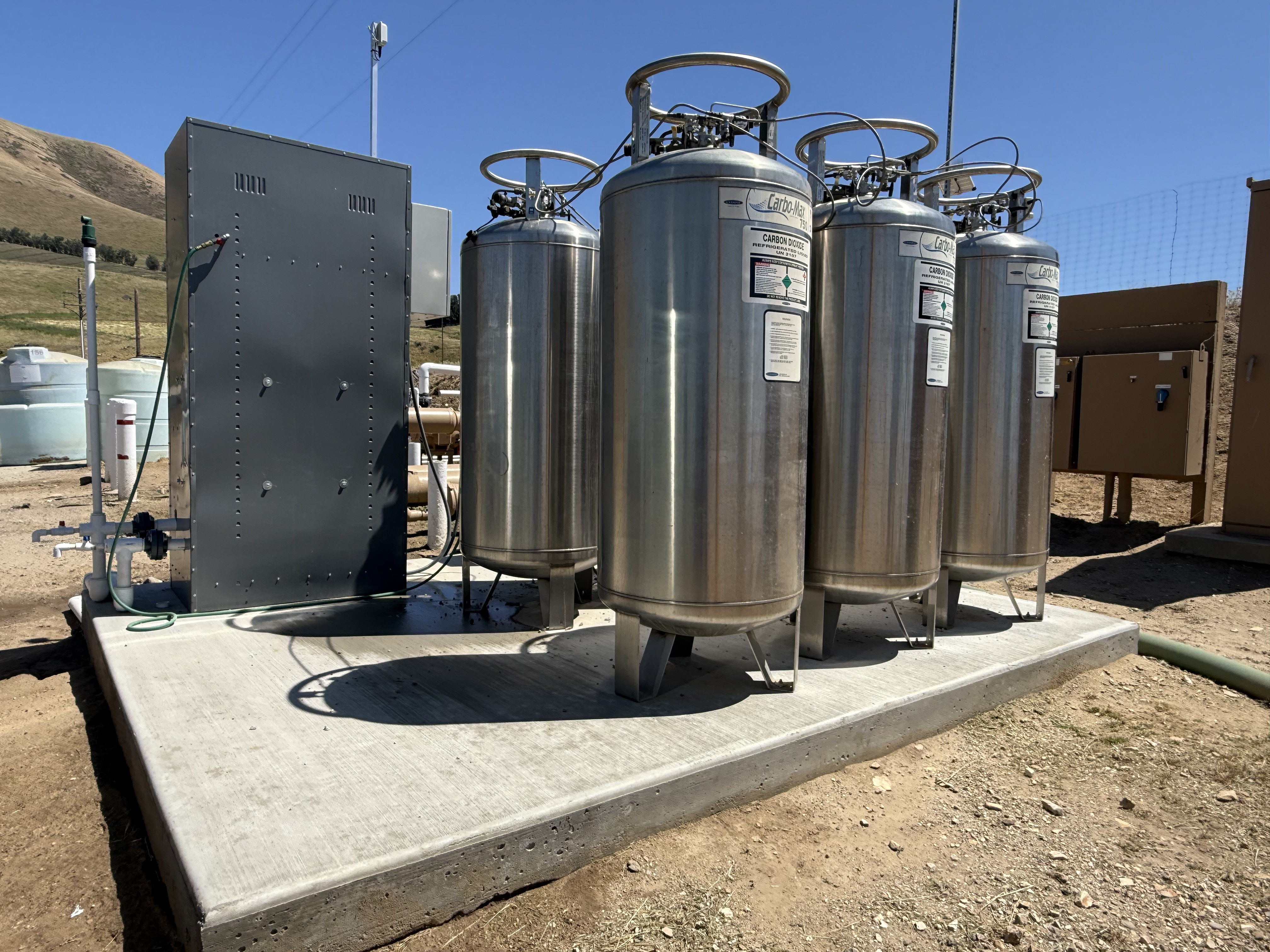
ECO2MIX reads actual water pH with a calibrated probe on every irrigation event and adjusts CO₂ in real time until the setpoint is reached. If bicarbonates spike, more CO₂ goes in. The pH at the emitter matches the target.
Can It Hold the Low End? Yes.
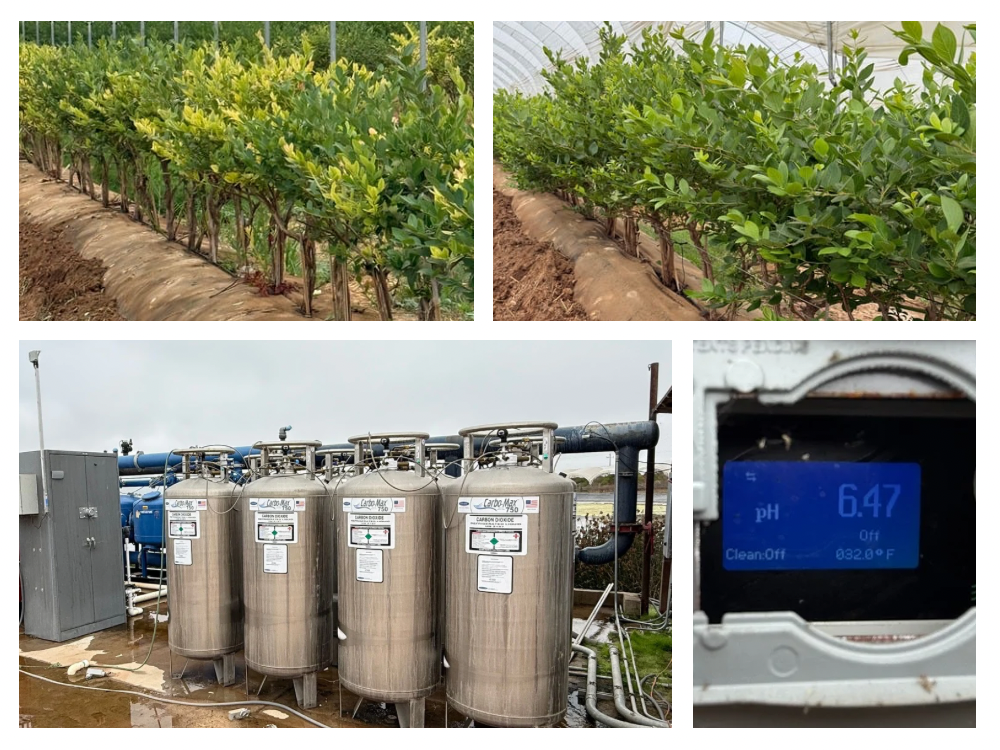
ECO2MIX holding pH 6.3 for blueberry irrigation in a certified organic operation. Blueberries need the low end of the range, exactly where burners struggle most.
The burner's strongest argument was certification. ECO2MIX carbonic acid is CCOF approved for certified organic operations, and pending NOSB approval for the USDA National List. The same chemistry as rainwater and sparkling water, with no smoke and no hazardous storage.
“What we had before was either no treatment of water or a traditional sulfur burner, and this system just seemed to be a lot more user-friendly. You don't have misses in applications, because if it's on, it's working.”

The Full Side-by-Side
| Factor | Sulfur Burner | Carbonic Acid (ECO2MIX) |
|---|---|---|
| pH control | Binary on/off, no feedback | Probe-driven, holds the setpoint |
| Reaches pH 6.5 in hard water | Not reliably | Yes, dose adjusts automatically |
| Left in the soil | Sulfate and sulfite, accumulating | Nothing. CO₂ and water |
| Soil biology | Suppressed over time | Improves. CO₂ feeds microbes |
| Operator experience | SO₂ smoke irritates workers | No fumes, no smoke |
| Energy use | 15+ HP combustion | 1 HP motor |
| Maintenance | Chamber cleaning, corrosion checks | Serviced every 6 to 8 weeks, included |
| Organic certification | USDA National List | CCOF approved, NOSB pending |
| Investment model | Capital purchase | Monthly service, no upfront cost |
Common Questions
Is carbonic acid approved for organic operations like sulfur burners are?
Can carbonic acid reach lower pH targets than a sulfur burner?
How does the energy use compare?
A Certified Organic Alternative to Sulfur Burners
Precise, probe-driven water pH control as a fully managed service. No upfront equipment cost, no sulfur dioxide smoke.