Industries We Serve
Most commercial water in the American West is too alkaline. Bicarbonates scale equipment, lock out nutrients, and require operators to handle mineral acid every week. There is a better chemistry.
The Same Root Problem Across Every Industry
Whether water feeds a crop, cools a process line, or washes a finished product, alkaline water with elevated bicarbonates creates the same downstream costs. Scale accumulates inside pipes, emitters, and heat exchangers. Equipment fails earlier. Nutrients lock out before reaching roots. Chemical processes run less efficiently as pH drifts higher than intended.
The standard fix — sulfuric acid, hydrochloric acid, citric acid — brings the pH down. But mineral acids leave residual ions. Sulfate accumulates in soil season after season. Chloride corrodes equipment. Organic acids introduce carbon loads that affect downstream chemistry. The problem is solved at the front and created again at the back.
Get a Proposal
Why Carbonic Acid Instead of Mineral Acids
Dissolving CO₂ into water forms carbonic acid. It does the same pH control job as sulfuric acid. When it finishes, CO₂ off-gasses as a vapor and water remains. Nothing accumulates. Nothing corrodes. Nothing requires a hazardous materials permit.
No Residual Salts
CO₂ reverts to gas and water after adjusting pH. Nothing accumulates in soil, product, or effluent.
Safe to Handle
No bulk acid storage, no corrosion risk, no hazardous materials handling. The same chemistry as sparkling water.
Precise Control
Automated pH probe feedback loop holds your target pH ±0.1 regardless of flow or source variation.
Turnkey Service
ECO2MIX provides equipment, CO₂ supply, installation, monitoring, and maintenance — fixed price per unit or acre.
Agriculture & Turf
The primary application for ECO2MIX. High-pH, high-bicarbonate irrigation water is one of the most widespread and under-managed problems in production agriculture and golf course management.
Tree Nuts
Almonds, pistachios, and walnuts in California's Central Valley — high-pH, high-bicarbonate water locks out nutrients and scales drip lines.
Learn more →Berries
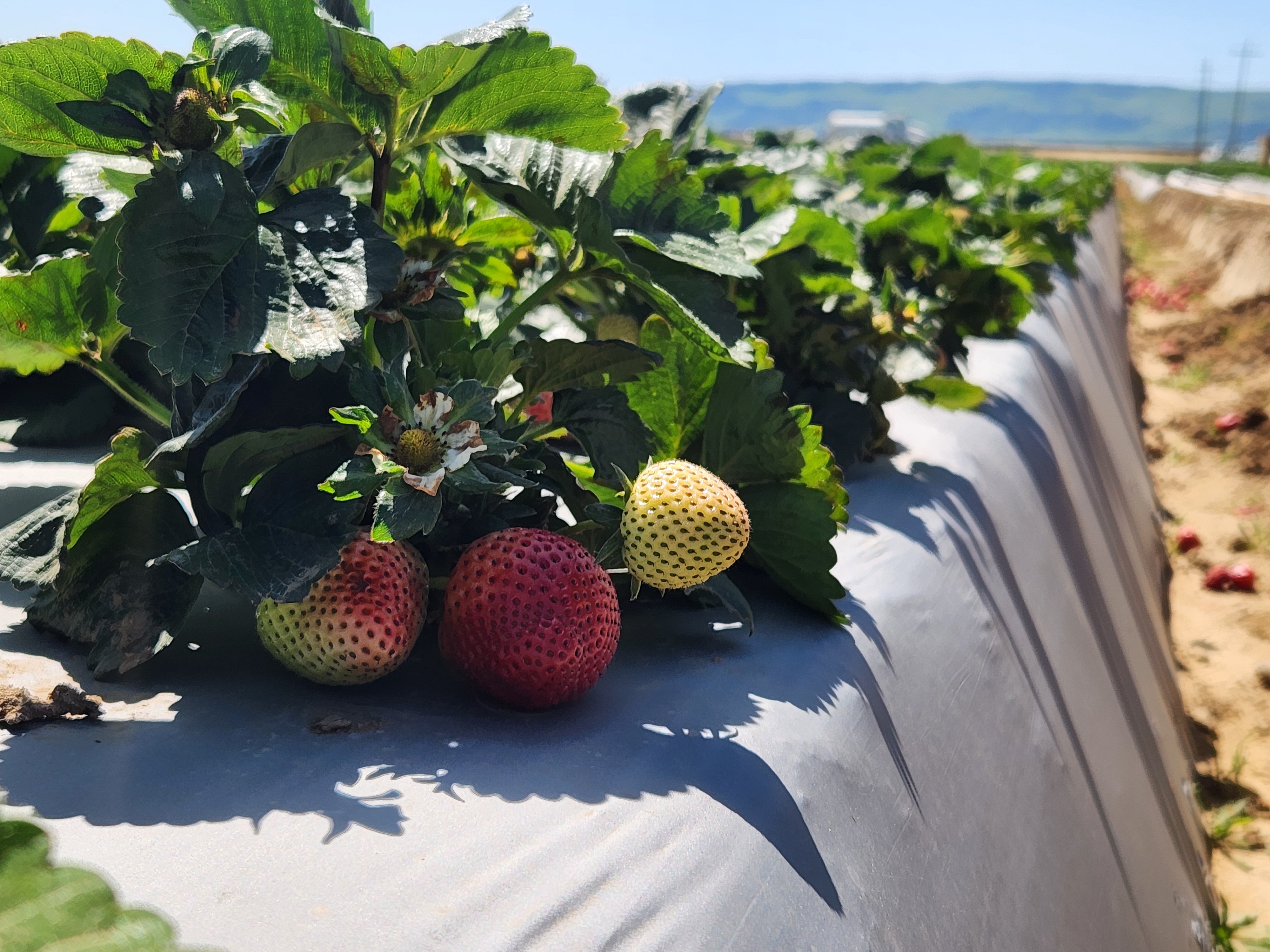
Strawberry and berry operations on California's coast benefit from water pH control that adds no sulfates to coastal soils already high in sulfate. CCOF-approved for organic production.
Learn more →Row Crops & Vegetables
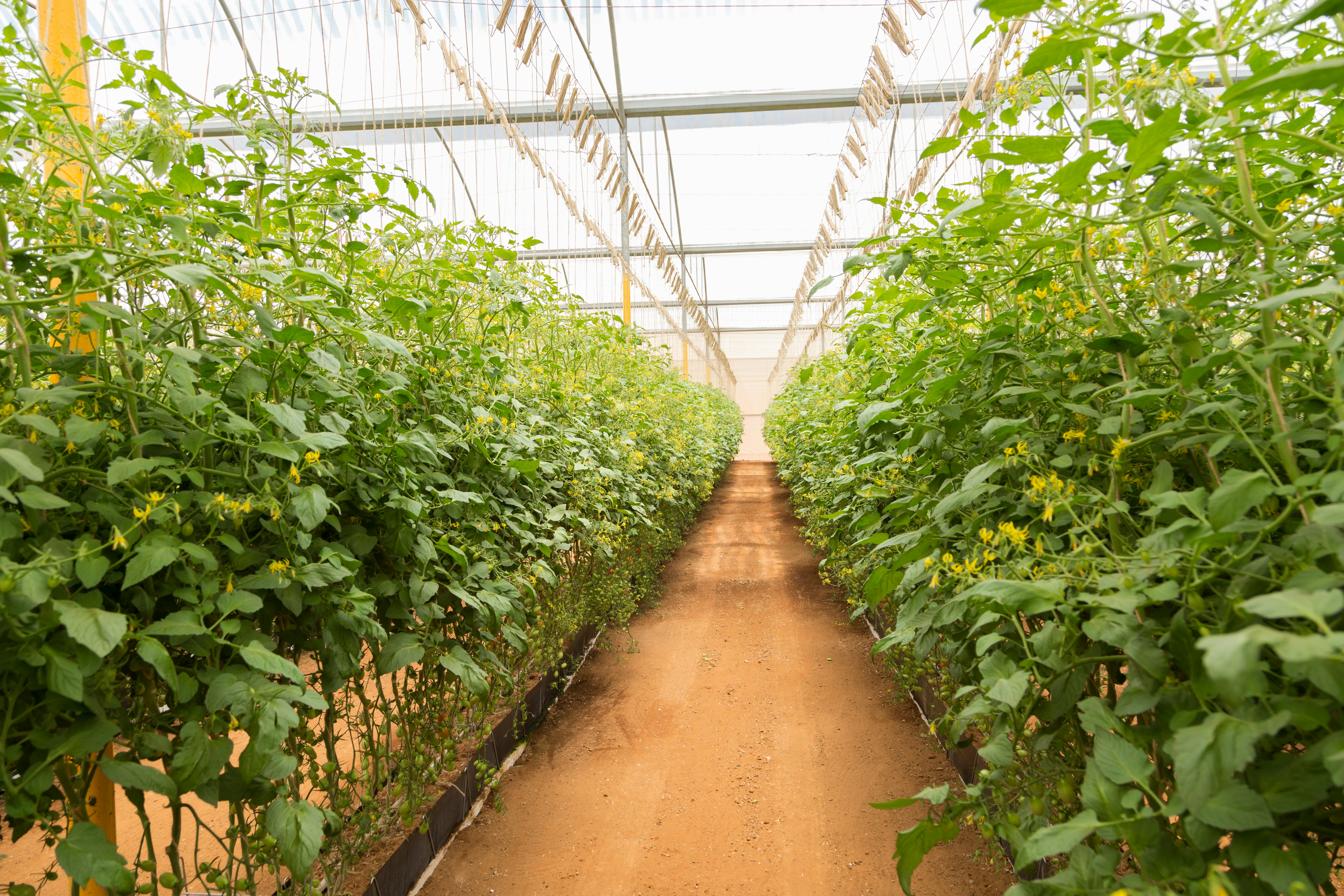
Tomatoes, peppers, and other row crops benefit from optimized pH that keeps iron, zinc, and phosphorus available to roots.
See case studies →Citrus & Avocado
Shallow-rooted crops are especially sensitive to bicarbonate buildup. Carbonic acid keeps the root zone chemistry favorable season after season.
Read more →Golf & Turf
Sand-based putting greens depend on infiltration. High-bicarbonate irrigation water causes surface sealing, black layer risk, and poor rooting. Fixed monthly service, no acid on property.
Learn more →Horticulture
Large-scale greenhouse operations benefit from precise pH control and the bonus of dissolved CO₂ added directly to the root zone through irrigation.
Learn more →Vineyards
High-pH well water locks up iron in grapevines, scales drip systems, and accumulates sulfates when treated with sulfuric acid. Carbonic acid leaves no residual. CCOF-approved for organic wine programs.
Learn more →Deep Dive: Tree Nuts
Almonds, pistachios, and walnuts in California's Central Valley face the most concentrated version of the high-pH water problem. See how ECO2MIX solves it — without sulfuric acid.
Industrial Applications
Water pH is not only an agricultural problem. ECO2MIX can inject CO₂ into wastewater and process water in any facility that generates alkaline effluent or requires precise pH control.
Dairies
Dairies generate alkaline wastewaters with pH reaching 10. This alkalinity must be neutralized before discharge.
- Challenge
- Alkaline washdown and process water at pH 8–10
- Benefit
- Safe, precise neutralization with no chemical residue
Beverages
Bottle washing produces highly alkaline wastewater near pH 11. Reducing pH prevents lime deposits and protects equipment.
- Challenge
- Bottle-cleaning effluent at pH 10–11
- Benefit
- Prevents lime scaling, protects downstream equipment
Pulp & Paper
Precise pH is critical throughout paper and pulp production. Carbonic acid's flat neutralization curve ensures exact results.
- Challenge
- Process water requiring tight pH control
- Benefit
- Flat neutralization curve prevents over-acidification
Textile
Mercerization uses caustic soda (NaOH) that must be neutralized before wastewater discharge.
- Challenge
- Caustic soda wastewater from mercerization
- Benefit
- Efficient neutralization, no hazardous acid storage
Leather
During de-liming, carbonic acid eliminates acid handling risks, reduces nitrogen in effluent, and cuts ammonia gas in the plant.
- Challenge
- Alkaline de-liming effluent with ammonia risk
- Benefit
- Reduces nitrogen in effluent, eliminates ammonia gas
Concrete
Concrete production generates highly alkaline runoff. Carbonic acid neutralizes wastewater and prevents lime scaling in pumps.
- Challenge
- Alkaline concrete washout and construction runoff
- Benefit
- Prevents lime scaling, meets discharge pH requirements
Ready to Talk About Your Application?
Every water source is different. Tell us your pH, flow rate, and application — we'll spec a system and send a proposal. No obligation.
Contact ECO2MIX