Sustainability

CO₂ that would otherwise be released goes into your irrigation water. It does the water pH control job. Then it stores in your soil.

The Best Use for CO₂

Industrial CO₂ is a byproduct of fermentation, combustion, and manufacturing. Most of it is released into the atmosphere. ECO2MIX captures that CO₂ and dissolves it into irrigation water, where it forms carbonic acid for water pH control. This is the same reaction that gives rainwater its natural acidity.

Carbonic acid does the same job as sulfuric acid. It neutralizes bicarbonates and brings irrigation water down to a target pH. But it leaves no residue. No sulfate accumulates in the soil. No ion builds up season after season. The CO₂ that does the water pH control work either off-gasses harmlessly or stays in the soil, where it feeds microbial activity and is stored as organic carbon.
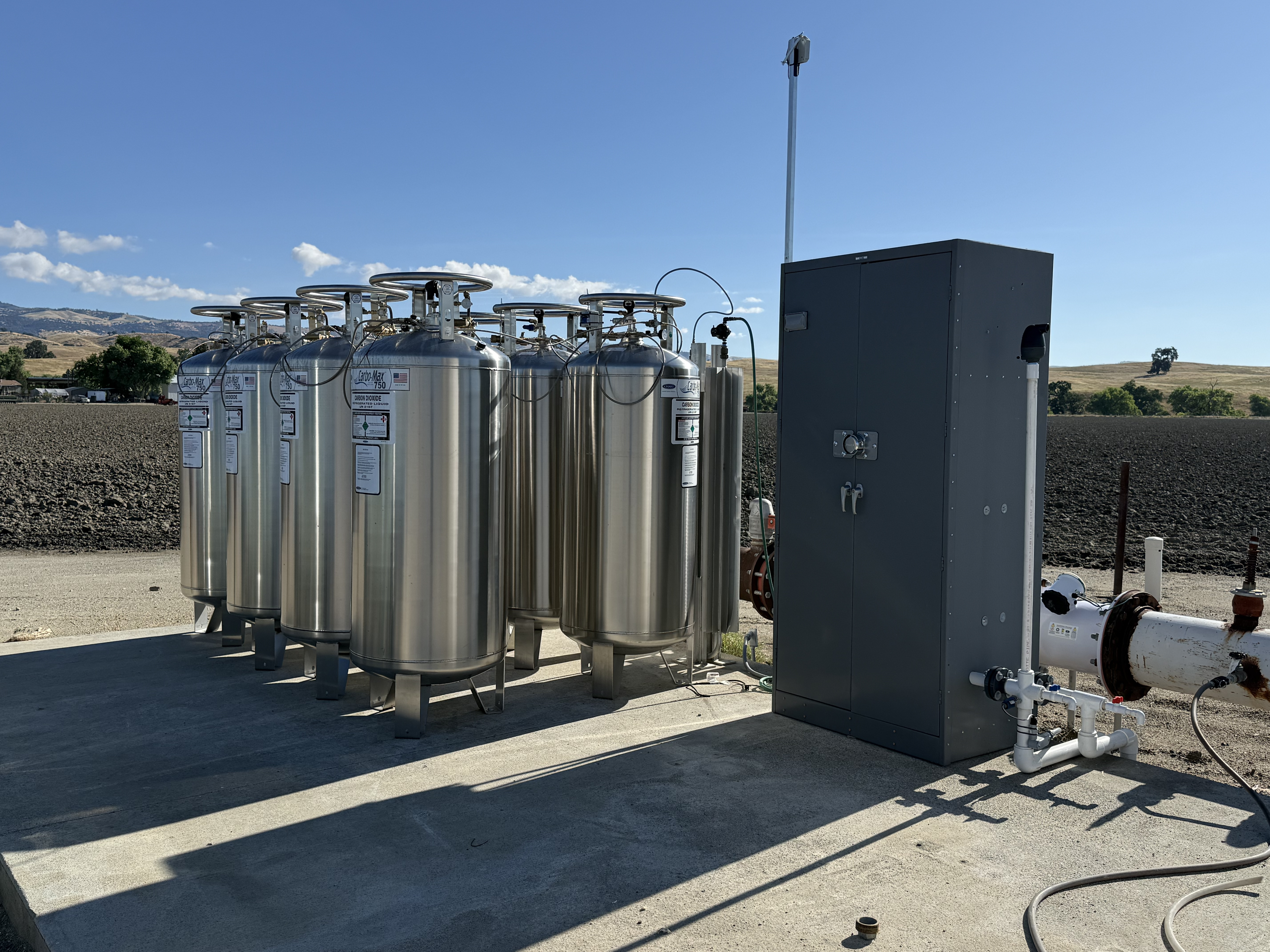
One input does two jobs: water pH control in the line, then soil health at the root zone.

ECO2MIX reactor installed at a field pump station

What Changes When CO₂ Replaces Acid

Sulfuric acid is effective at lowering water pH. It is also permanent. Every gallon treated with sulfuric acid deposits sulfate into the soil. Sulfate has no biological removal pathway. It accumulates season after season, suppressing the microbial activity that drives nutrient availability and organic matter formation. Carbonic acid does the same water pH control job and then becomes water and CO₂. Nothing is left behind that the soil has to manage.

The sustainability case for ECO2MIX is not theoretical. It follows directly from the chemistry. A compound that converts back to its feedstocks after doing its job cannot accumulate in the way that a mineral acid does. What remains is the CO₂ fraction that stays dissolved in the soil water, where it supports the carbon cycle instead of disrupting it.

Research Projects

Two university studies are underway to quantify the soil carbon and biology outcomes of carbonic acid water pH control. The researchers will publish findings as they become available.

California State University, Fresno

Soil Carbon Storage in Pistachio Production

A three-year study led by Dr. Sangeeta Bansal at Fresno State, in partnership with American Pistachio Growers. Six pistachio farms across California's Central Valley are comparing carbonic acid treatment, sulfuric acid treatment, and an untreated control to quantify how much CO₂ delivered through irrigation water is stored in the soil over time.

Study started 2026. Data not yet available.

Reach out if you want to follow the results as they're published.

University of Florida

Turf Health and Soil Biology on Golf Courses

A two-year study led by Dr. Marco Schiavon at the University of Florida. The study compares carbonic acid water pH control against an untreated control, measuring outcomes for turf health and soil biology on golf course fairways and greens.

Study started 2025. Data not yet available.

Reach out if you want to follow the results as they're published.

Watch: Could CO₂ Be the Secret Ally Agriculture Needs?

Waldo Moraga at TEDxVisalia on replacing dangerous acids and returning CO₂ to the soil

See What Carbonic Acid Does for Your Operation

Tell us about your water source and crop or turf application. We'll spec a system and explain what to expect.