Most Irrigation Water in the American West Is Too Alkaline
Iron, manganese, zinc, and phosphorus are already in your soil. High-pH irrigation water locks them out at the root zone during the exact window when crops are actively feeding. Delivering water at pH 6.5–6.6 unlocks what is already there, without adding more inputs.
Switching from sulfuric acid to carbonic acid removes sulfate accumulation from the equation entirely. Side-by-side soil tests on a farm using both show CO₂ respiration up 69% and microbial diversity up 12.34% on carbonic acid blocks while the sulfuric acid blocks declined. The soil biology that cycles nutrients and builds long-term fertility responds directly to the carbon carbonic acid delivers and sulfuric acid cannot. ECO2MIX handles installation, CO₂ supply, monitoring, and maintenance under a fixed-price service contract. No capital investment, no acid to store, no equipment to purchase. Over 100 systems have been running on farms across California and Florida since 2017.
Get a Proposal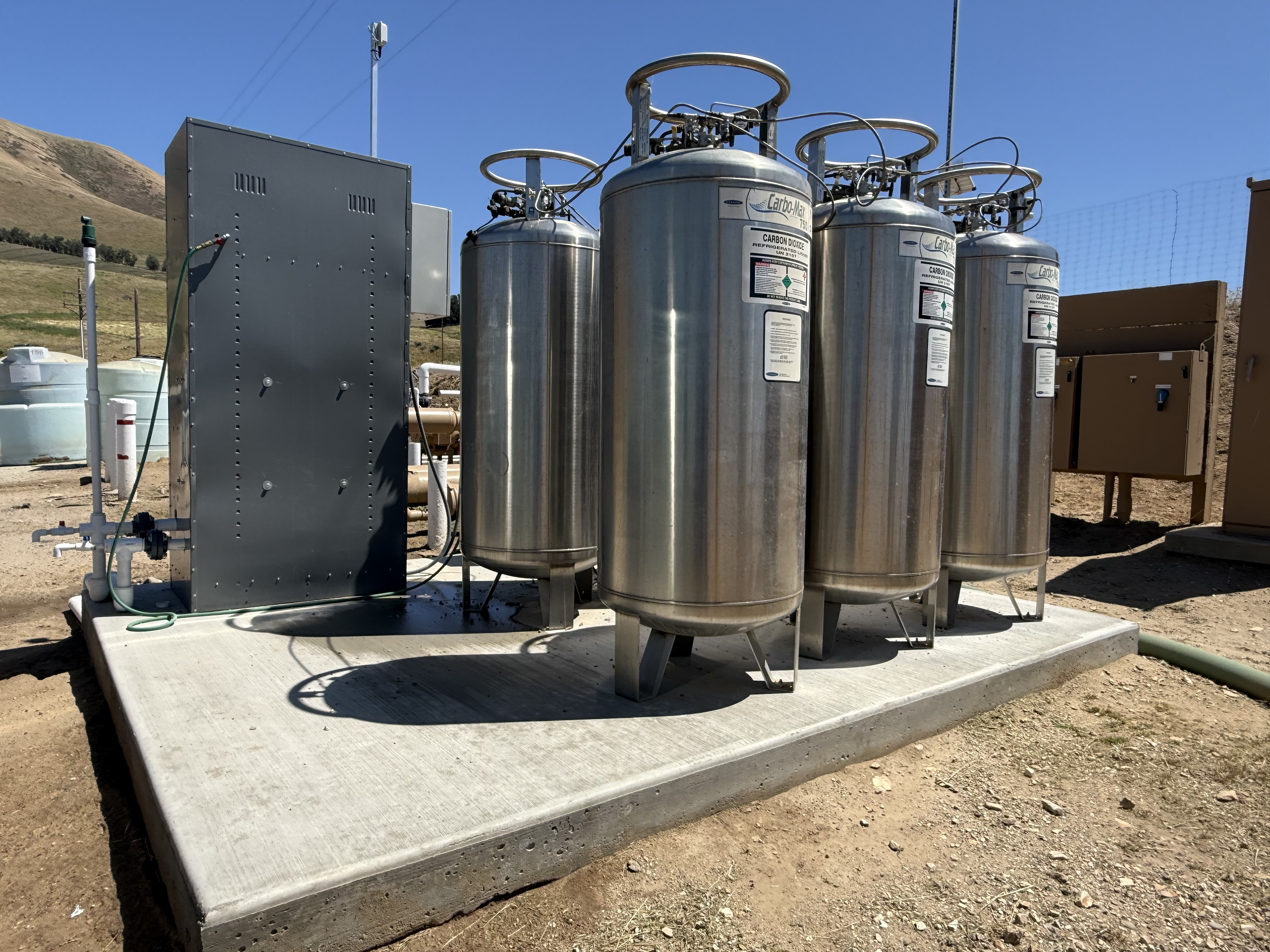
“ECO2 brings more of a natural approach to water treatment versus some of our products that we've used in the past. ECO2 is something that provides a safe product that also incorporates or is natural to the plant environment.”

- 20 years advising growers as an agronomist and consultant
- Recommends carbonic acid over the water treatment products he used before
- A safe product that is natural to the plant environment
Why Growers Choose ECO2MIX
Nutrient Availability
Delivering water at pH 6.5–6.6 keeps iron, manganese, zinc, and phosphorus plant-available at the root zone, unlocking the nutrients already in your soil without adding more inputs.
Soil Biology
As carbonic acid dissipates after irrigation, CO₂ feeds soil microbes. Side-by-side data shows CO₂ respiration up 69% and microbial diversity up 12.34% compared to sulfuric acid blocks on the same farm.
Emitter and Line Protection
Treating water before the field prevents calcium carbonate from precipitating inside drip tape, filters, and emitters, keeping distribution uniform and reducing maintenance frequency.
No Chemical Handling
No acid to store, handle, or dispose of. ECO2MIX manages the system remotely. Your team does not touch any chemical inputs between service visits.
- CCOF-approved for certified organic operations. Compare to sulfur burners.
- Drip tape and emitter scale stopped before it reaches the field
- Fixed service contract: ECO2MIX handles installation, CO₂, monitoring, and maintenance
How It Works
- 01
CO2 injection at the pump station
CO₂ from a dedicated supply tank is injected into the water line immediately after your pump, before water enters the field.
- 02
Pressurized dissolution
Inside the ECO2MIX reactor, CO₂ fully dissolves into the water under pressure, forming carbonic acid throughout the water stream.
- 03
Real-time water pH control
A probe downstream reads water pH continuously. The automated controller adjusts CO₂ dose to maintain your target pH, regardless of flow rate or source variation.
- 04
Remote monitoring and service
ECO2MIX monitors system performance remotely. A technician visits every 6–8 weeks to calibrate the pH probe and replenish CO₂. No operator action required between visits.
Research & Field Observations
Case studies, agronomist observations, and technical explainers from California and beyond.

Why an Agronomist Puts His Growers on Carbonic Acid
Eryn Gray owns AgroSource and has advised growers for 20 years. He explains why carbonic acid water pH control replaced the water treatment products he used to recommend.
Read more →
Can Carbonic Acid Support Blackberries?
Phillip Adam of Innovative Produce in Santa Maria compares ECO2MIX carbonic acid water pH control against the sulfur burner and the untreated water he used on his blackberry blocks before it.
Read more →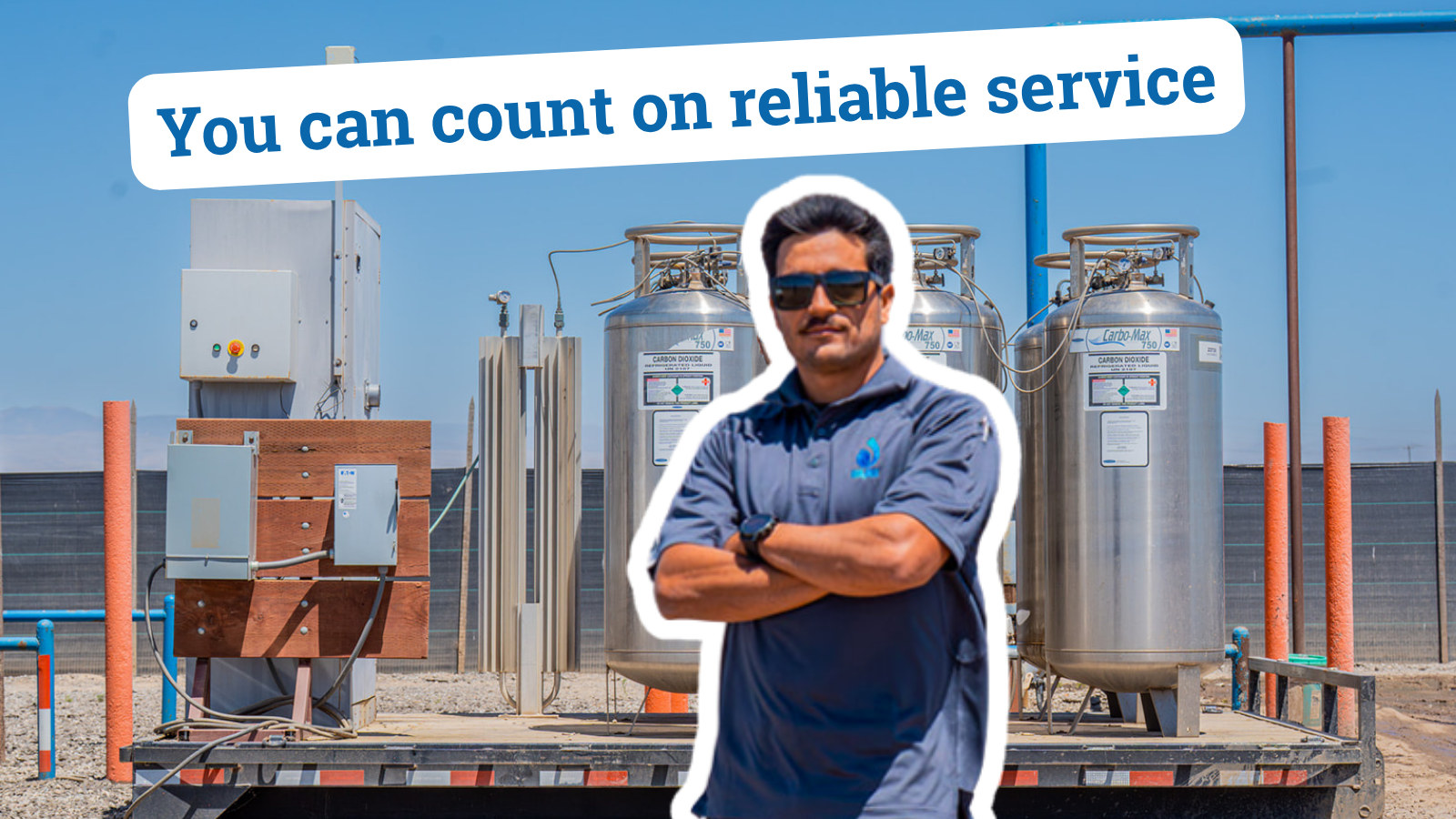
Who Keeps Your Water pH Control System on Target
Mark Velasquez covers the Central Coast between Watsonville and Santa Maria, checking every ECO2MIX system on his route. What a fully managed water pH control service looks like from the technician's side.
Read more →Common Questions
How does carbonic acid improve nutrient uptake?
Will carbonic acid affect my drip tape, emitters, or filters?
Is carbonic acid approved for certified organic operations?
How does the service model work?
How much acreage can one ECO2MIX unit treat?
Is there ongoing research on carbonic acid for agricultural soil health?
How soon will I see results after switching to carbonic acid?

ECO2MIX Agriculture One-Pager
One-page summary of the ECO2MIX carbonic acid system for agriculture: benefits, how it works, and contact info.
View One-Pager ↗