High-pH Well Water Is a Quiet Turf Problem
ECO2MIX is a service, not equipment: a fixed monthly cost covering installation, CO₂, monitoring, and maintenance. No capital request, no board approval. It does the same water pH control job as sulfuric acid, without the hazards or corrosion.
Nothing corrosive is stored or handled between service visits. Tom Lipscomb at Seven Oaks has run it four years with no corrosion, and Dan Stover at Deering Bay saw Take All Patch clear within six months.
Get a Proposal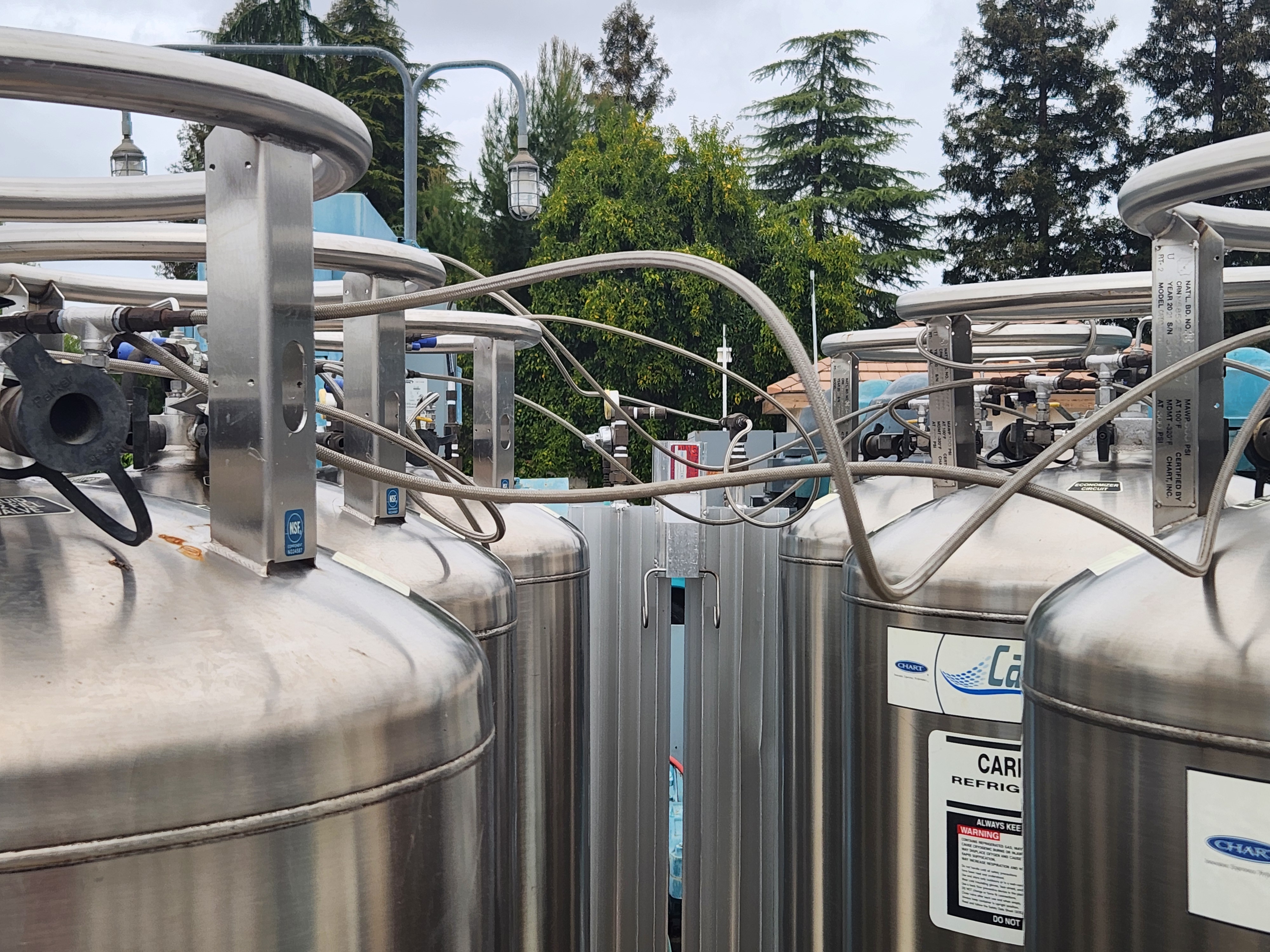
“I wanted to go more safe environmentally. There's sulfuric acid, there's other things you can use that are somewhat harmful to your internal structure. Your irrigation piping and things like that. He came to me with the CO₂. Which is basically what you get out of a soda machine, so it can't be that harmful.”

- Reduced irrigation pH from 8.4 to 6.8
- Calcium layer in greens began dissolving into solution
- Improved soil percolation after four years
- No corrosion to pipes, fittings, or brass heads
Why Superintendents Choose ECO2MIX
Safety
- No acid stored or handled on the course
- Self-buffering: carbonic acid cannot over-acidify
- No corrosion on brass heads, pipe, or fittings
Service
- Predictable fixed monthly cost, no capital request
- Equipment monitored remotely and always working
- Calibration and CO₂ refills every 6 to 8 weeks, included
Soil
- Healthier turf color, less iron chlorosis
- Dissolves calcium carbonate layers in greens
- Lowers black layer risk by removing bicarbonates

Haven't Heard of Carbonic Acid for Turf?
The USGA Water Conservation Playbook names carbonic acid as a recognized water acidification method for courses on high-bicarbonate water. It's on page 200.
“Carbonic acid is a safer alternative for injection because of its low corrosivity and it can be used in an automated process of injection.”Read the USGA Playbook (p. 200)
Why Water pH Matters on a Golf Course
Bicarbonate Buildup in Putting Green Profiles
Sand-based putting greens depend on infiltration and drainage. Bicarbonate-laden water deposited repeatedly over years builds calcium carbonate layers in the profile, softening the surface, slowing drainage, and reducing aeration effectiveness. Many recycled and well water supplies carry elevated bicarbonates that demand active management.
Nutrient Availability and Iron Chlorosis
At pH above 7.0, iron, manganese, and phosphorus all become less plant-available. Turf on courses irrigating with high-pH water often shows iron chlorosis symptoms even when nutrient inputs are adequate. The root zone chemistry is preventing uptake, not fertilizer volume.
Black Layer Risk
Bicarbonate-driven soil chemistry changes, combined with compaction and restricted drainage, push soil conditions toward anaerobic pockets where sulfate-reducing bacteria thrive. The result is black layer: foul-smelling, destructive to the rootzone, and difficult to remediate. Water quality is the most directly manageable contributing factor.
Scale in Irrigation Lines and Heads
High-bicarbonate water precipitates calcium carbonate scale inside pipes, heads, and filters. Scale degrades distribution uniformity over time and increases maintenance costs. Reducing bicarbonates at the pump station before water enters the system is the most direct point of intervention.
“Spots that were historically prone to Take All Patch stopped showing any symptoms. Now being 6 months in, there is no question it has dramatically improved the health, color and density of the turf throughout the property.”
Take All Patch is caused by the fungal pathogen Gaeumannomyces graminis var. graminis. It thrives in alkaline soil conditions. Reducing water pH at the source changes the soil chemistry that supports its spread.
Carbonic Acid vs. Sulfuric Acid for Golf Courses
| Sulfuric Acid | ECO2MIX Carbonic Acid |
|---|---|
| Effective, but hazardous to handle and store. | Safe to handle. Same chemistry as carbonated water. |
| Adds sulfate (SO₄²⁻), which accumulates in soil over time. | No residual salts. CO₂ reverts to gas and water. |
| Corrosion risk on brass heads, aluminum pipe, and concrete. | No corrosion risk on heads, pipes, or fittings. |
| Narrow margin for error. Over-injection drops pH fast. | Self-buffering weak acid. Will not over-acidify regardless of dose. |
| Regulatory handling requirements in many states. | Fully remote-managed service, no operator handling required. |
How It Works
- 01
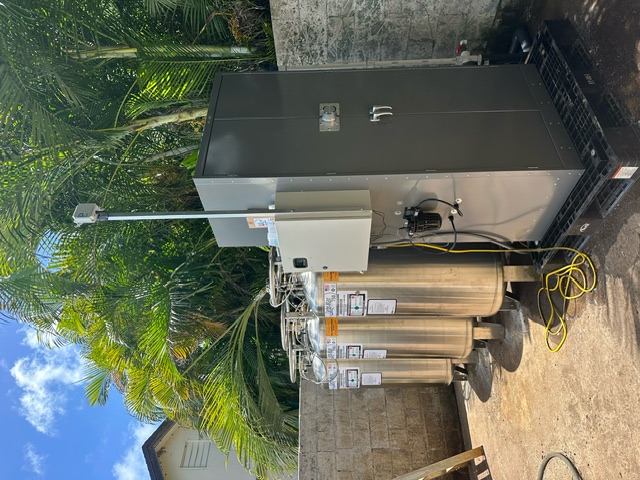
CO2 injection at the pump station
CO₂ from a dedicated supply tank is injected into the water line immediately after your pump, before water enters the distribution system.
- 02
Pressurized dissolution
Inside the ECO2MIX reactor, CO₂ fully dissolves into the water under pressure, forming carbonic acid throughout the water stream.
- 03
Real-time water pH control
A probe downstream reads irrigation water pH continuously. The automated controller adjusts CO₂ dose to maintain your target, typically 6.5–7.0, regardless of flow rate or source variation.
- 04
Remote monitoring and service
ECO2MIX monitors system performance remotely. A technician visits every 6–8 weeks to calibrate the pH probe and replenish CO₂. No operator action required between visits.
Turf Research and Field Notes
Case studies, agronomist observations, and technical explainers from courses using carbonic acid water pH control.
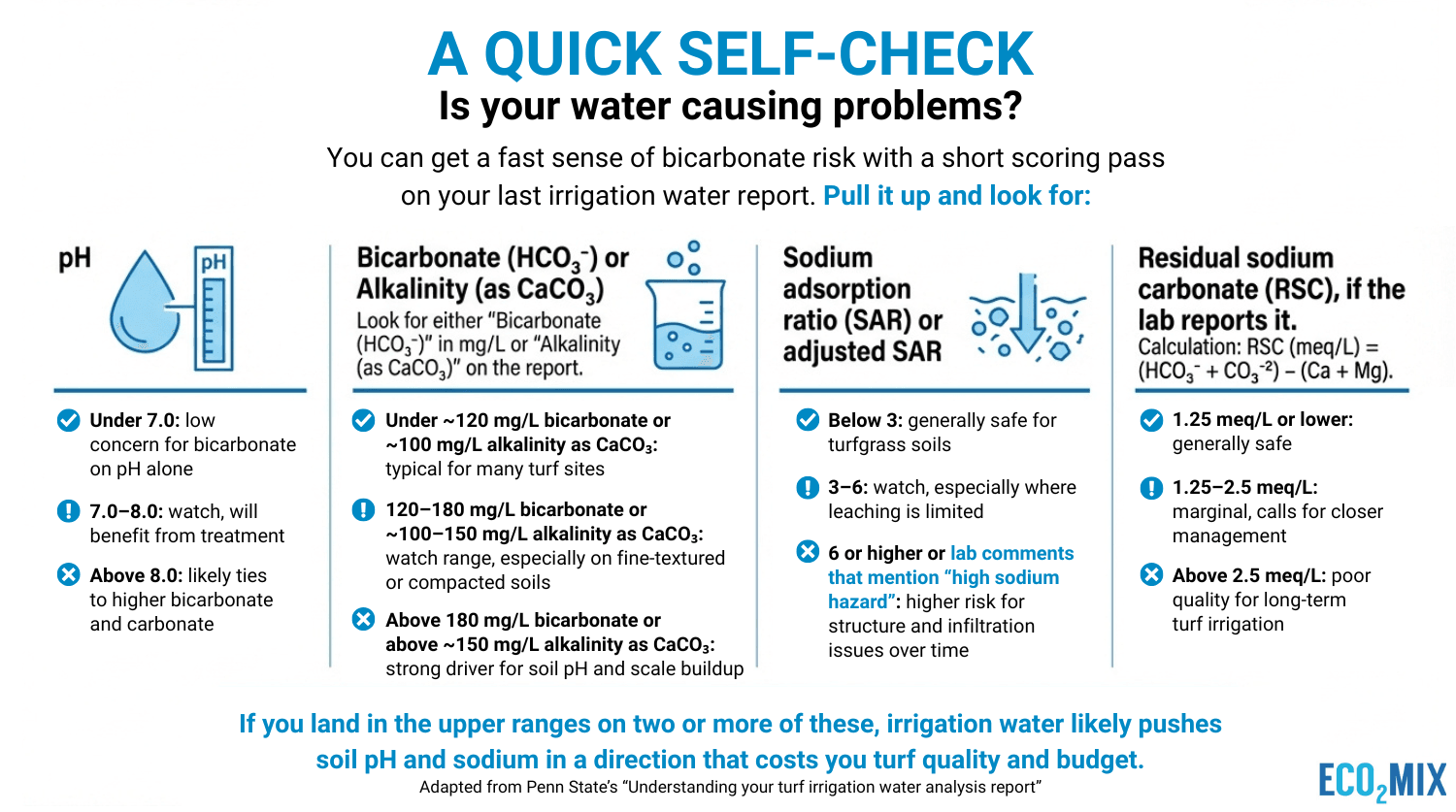
High Bicarbonate Irrigation Water on Golf Courses
High Bicarbonate Irrigation Water on Golf Courses
Read more →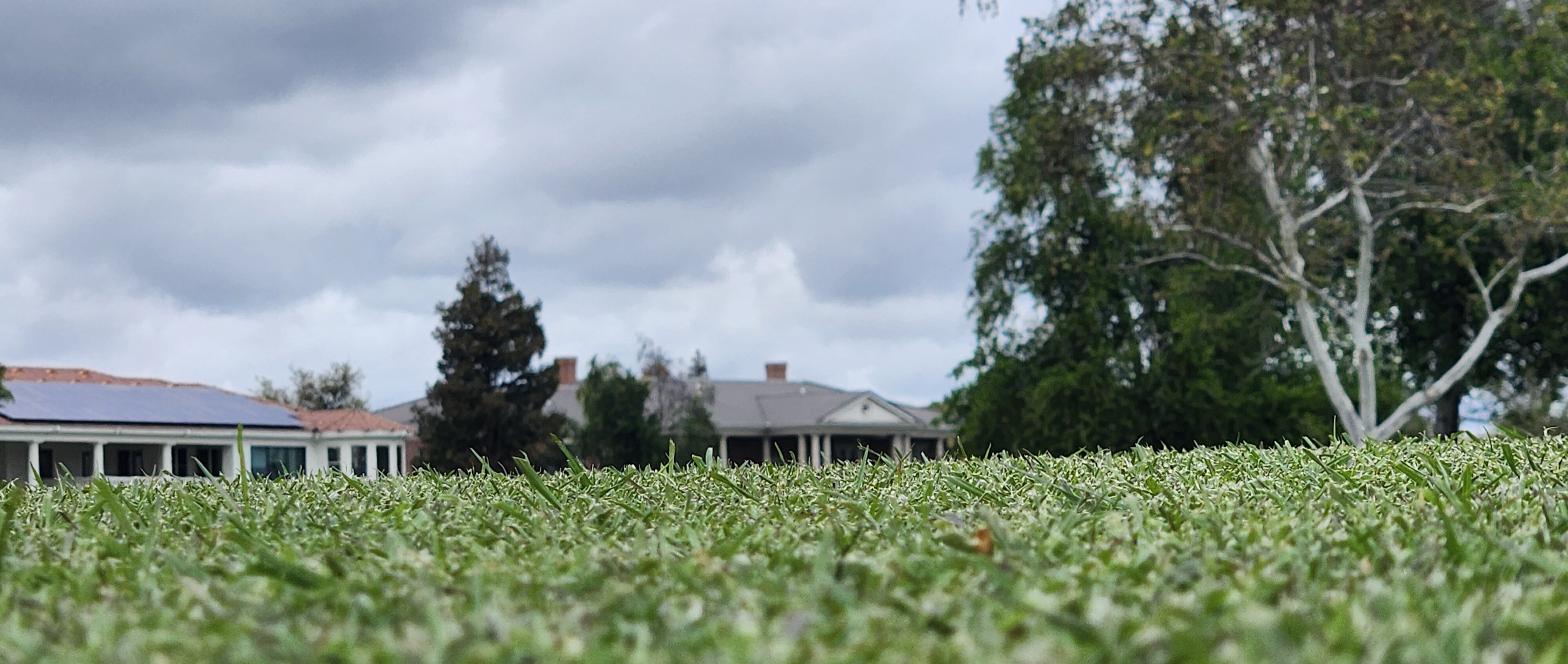
Nanobubbles vs Carbonic Acid for Turf
Nanobubble Technology vs Carbonic Acid Technology for Maintaining Optimal pH for Turf on Golf Courses
Read more →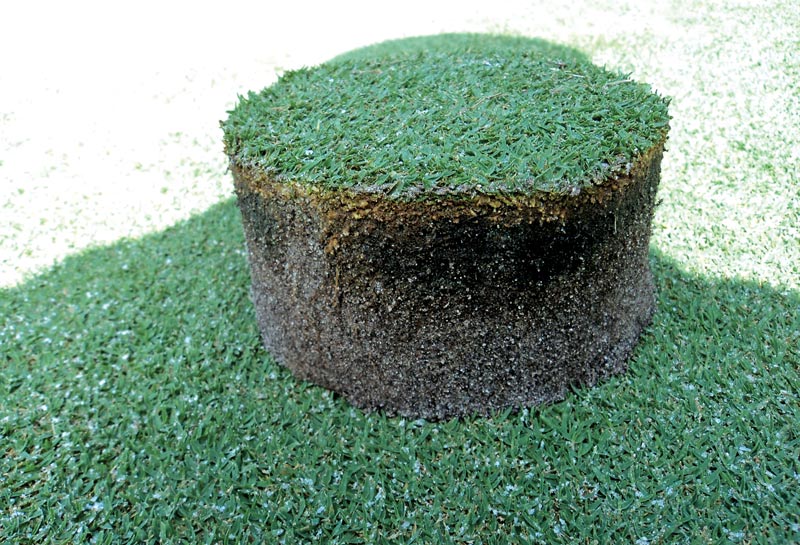
Understanding Black Layer on Golf Course Greens
Understanding Black Layer on Golf Course Greens: Causes and Prevention With Water Quality
Read more →Common Questions
What water pH should we target for turf and putting greens?
Will lowering water pH affect turf color or putting surface conditions?
Can carbonic acid help prevent black layer in putting greens?
How does ECO2MIX service the system, and will it disrupt play?
Are there safety or handling requirements for CO₂ on a golf course?
Has carbonic acid treatment affected snail populations on courses?
Is there independent research on carbonic acid for turf?
How soon will we see results on the course after starting treatment?
Does ECO2MIX work on recycled or effluent irrigation water?

ECO2MIX Golf & Turf One-Pager
One-page summary of the ECO2MIX carbonic acid system for golf courses and turfgrass.
View One-Pager ↗